
A flue in Vermont spends the winter hot and dry. Fire after fire drives moisture out of the masonry, and the chimney is in use often enough that problems announce themselves early.
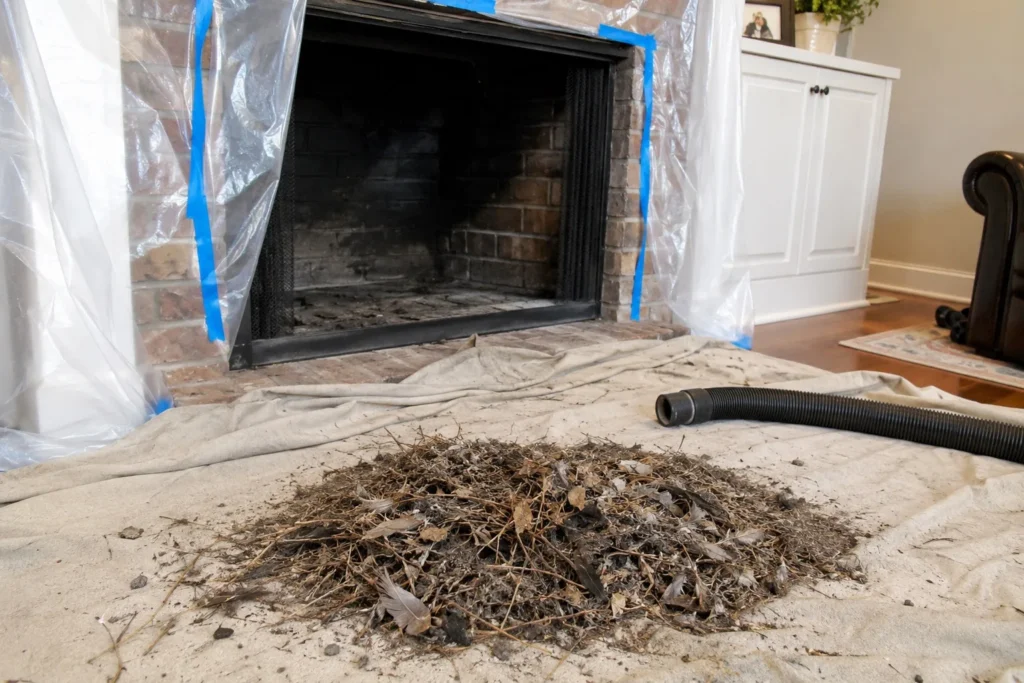
A flue in Broward County spends eleven months open, cool and humid. Nobody looks at it. Nothing disturbs it. And a warm, sheltered, undisturbed vertical shaft is an extremely attractive place to live if you are a bird.
What moves in during the other eleven months
Nesting
The most common thing we clear from South Florida chimneys, and it is not close. Birds build in the smoke chamber and on the smoke shelf, and the nest material is dry, packed and directly above where you are about to light a fire. If a cap is missing or has rusted open, routine near the coast, there is nothing stopping them.
Moisture
Humidity works on mortar joints year-round. Combined with wind-driven rain and, near the water, salt, it degrades the liner and the crown over time. Damage that would take a decade inland moves faster here.
Debris
Leaves, palm fronds and whatever else the last storm put on your roof. An uncapped flue collects it.
The creosote you do have still matters
Creosote is the tar-like residue wood smoke leaves on the flue wall. Light use means less of it, but two habits common in this climate produce more per fire than you would expect.
The first is burning damp wood. Wood stored outside in South Florida humidity is rarely as seasoned as the person burning it believes. Damp wood burns cooler and smokier, and smoke is what deposits creosote.
The second is damping down. When the fire is for atmosphere rather than heat, people close the damper to make it last. A slow smouldering fire is exactly the condition that produces the hardest, most stubborn glazed creosote.
Three atmospheric fires a year burned cool and damped down can deposit more creosote than a dozen hot, clean burns.
The January call
The pattern is the same every year. A cold front comes through, the temperature drops enough to make a fire appealing, and somebody lights the first one since last season. Ten minutes later the room is full of smoke, because the flue is blocked and the smoke has nowhere to go.
At that point you have a house full of smoke, a fire you need to put out, and no chimney service available at short notice because everyone else is calling too. The inspection that would have prevented it takes under an hour and could have happened any time in the preceding eleven months.
What an inspection covers
- Flue liner condition, cracking, spalling, gaps
- Smoke chamber and smoke shelf, including anything nesting there
- Damper operation and seal
- Firebox condition
- Exterior cap, crown and flashing, the parts that corrode fastest near the coast
- Creosote level, and whether it needs a sweep or not
Sometimes the answer is that it is fine and does not need sweeping this year. We would rather tell you that than manufacture a job. What you are buying is the answer, not the sweep.
Gas fireplaces are not exempt
Less creosote, same nesting, same moisture, same corrosion. The vent still needs checking for blockages and the flue for deterioration. Tell us which type you have when you book so we bring the right equipment. More on what a sweep and inspection covers, including storm damage checks.
Not lit it since last season?
An inspection takes under an hour and tells you whether it is safe before you find out the hard way.
Book a visit this week
Free quote, honest price, and photos of the work when we are done.
Or call us